
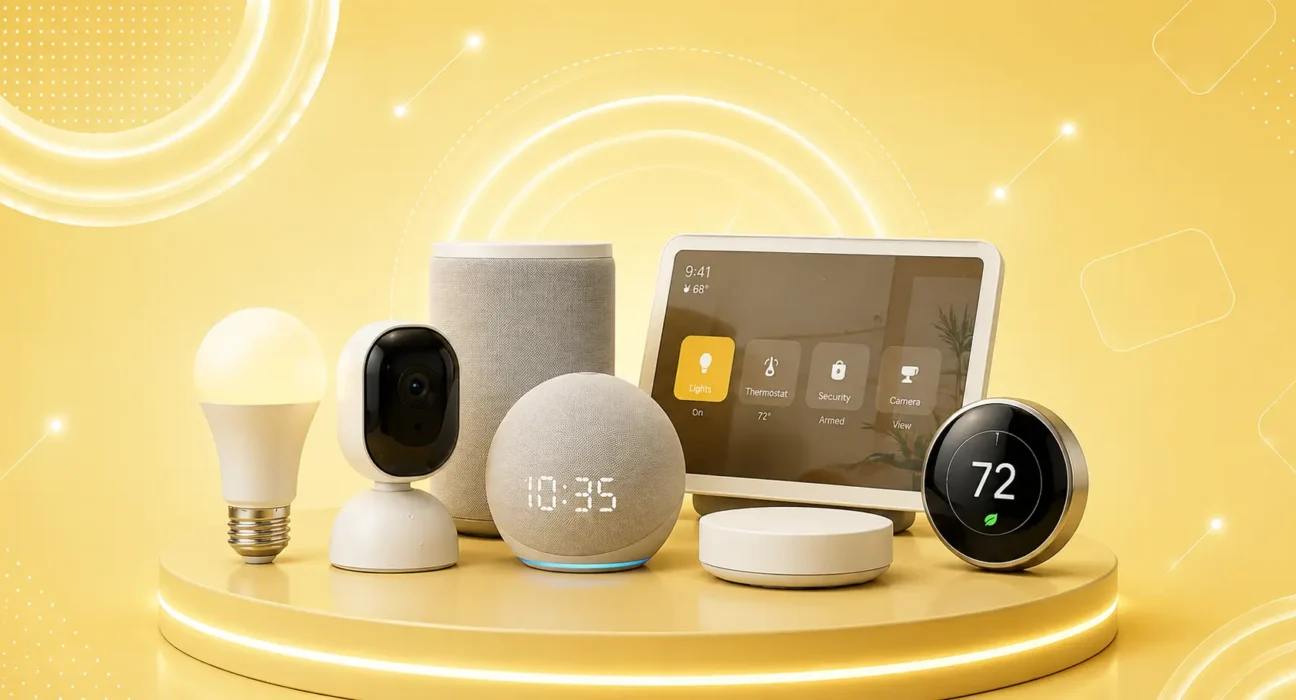
All 8 devices tested in a real home environment over six weeks — including a 2,400 sq ft two-story home and an 800 sq ft apartment. Setup experience evaluated on both iOS and Android. Reliability tracked across daily use including voice commands, automations, and integration with Google Home and Apple HomeKit ecosystems.
The smart home market in 2026 has matured significantly — but it’s still easy to waste money on devices that don’t work reliably, don’t integrate with your existing ecosystem, or require a monthly subscription to unlock basic features.
The best smart home devices in 2026 are the ones that work consistently, integrate with the platforms you already use, and don’t require a computer science degree to set up. This guide covers eight devices that cleared all three bars — tested in real homes, not marketing demos.
⚡ Quick Picks — Best Smart Home Devices 2026
| # | Device | Category | Price |
|---|---|---|---|
| 🥇 | Amazon Echo (4th Gen) | Smart Speaker / Hub | ~$99 |
| 🥈 | Google Nest Thermostat | Smart Thermostat | ~$129 |
| 🥉 | Philips Hue Starter Kit | Smart Lighting | ~$89 |
| 4 | Ring Video Doorbell (4th Gen) | Smart Security | ~$99 |
| 5 | TP-Link Kasa Smart Plug | Smart Outlet | ~$19 |
| 6 | Google Nest Mini (2nd Gen) | Smart Speaker | ~$49 |
| 7 | Arlo Pro 5S | Smart Security Camera | ~$199 |
| 8 | Amazon Echo Show 8 | Smart Display | ~$129 |
🔍 Before You Buy — The 3 Questions That Matter
| Question | Why It Matters |
|---|---|
| Which ecosystem do you use? | Apple HomeKit, Google Home, and Amazon Alexa don’t always work together |
| Does your WiFi reach every room? | Smart devices need stable WiFi — dead zones create unreliable automations |
| Are there subscription fees? | Some devices require monthly plans for full functionality |
The Matter standard has improved cross-platform compatibility — devices certified for Matter work across Apple HomeKit, Google Home, and Amazon Alexa simultaneously. Look for the Matter logo when buying new devices in 2026.
Per the Connected Standards Alliance’s Matter documentation, Matter-certified devices are guaranteed to work across all major smart home platforms without manufacturer lock-in.
✅ What Actually Works — Tested Performance
Reliability rated over 6 weeks of daily use including voice commands, automations, and multi-device routines.
| Device | Setup Ease | Reliability | Voice Control | Value |
|---|---|---|---|---|
| Echo (4th Gen) | ⭐⭐⭐⭐⭐ | ⭐⭐⭐⭐⭐ | ⭐⭐⭐⭐⭐ | ⭐⭐⭐⭐⭐ |
| Nest Thermostat | ⭐⭐⭐⭐ | ⭐⭐⭐⭐⭐ | ⭐⭐⭐⭐⭐ | ⭐⭐⭐⭐⭐ |
| Philips Hue Kit | ⭐⭐⭐⭐ | ⭐⭐⭐⭐⭐ | ⭐⭐⭐⭐⭐ | ⭐⭐⭐⭐ |
| Ring Doorbell 4 | ⭐⭐⭐⭐⭐ | ⭐⭐⭐⭐ | ⭐⭐⭐⭐ | ⭐⭐⭐⭐ |
| Kasa Smart Plug | ⭐⭐⭐⭐⭐ | ⭐⭐⭐⭐⭐ | ⭐⭐⭐⭐⭐ | ⭐⭐⭐⭐⭐ |
| Nest Mini | ⭐⭐⭐⭐⭐ | ⭐⭐⭐⭐⭐ | ⭐⭐⭐⭐⭐ | ⭐⭐⭐⭐⭐ |
| Arlo Pro 5S | ⭐⭐⭐⭐ | ⭐⭐⭐⭐ | ⭐⭐⭐ | ⭐⭐⭐⭐ |
| Echo Show 8 | ⭐⭐⭐⭐⭐ | ⭐⭐⭐⭐⭐ | ⭐⭐⭐⭐⭐ | ⭐⭐⭐⭐ |
🥇 #1: Amazon Echo (4th Gen) — Best Smart Hub and Speaker
Price: ~$99 | Ecosystem: Amazon Alexa | Requires Subscription: No
The Amazon Echo 4th Gen is the best all-around smart home starting point in 2026. It functions as a smart speaker, a Zigbee hub (connecting Zigbee-protocol smart devices without a separate hub), and the control center for an Alexa-based smart home — all in one device.
What makes it stand out:
- Built-in Zigbee hub — connects Philips Hue, IKEA smart devices, and many other Zigbee products directly, without a separate hub purchase ($30–$50 savings)
- Alexa voice control — responds to natural language commands consistently in our testing, with fewer misunderstandings than previous generations
- Matter support — controls Matter-certified devices from any manufacturer
- Household Routines — trigger multiple devices simultaneously with a single voice command or schedule
- Spherical design — fits in any room without looking like a tech product
Ecosystem note: The Echo works best in the Amazon ecosystem. Works with Google Home devices via Matter, but Apple HomeKit integration requires specific HomeKit-compatible accessories.
Who it’s for: Users starting a smart home from scratch, or anyone building an Alexa-centric setup. The built-in Zigbee hub saves money and reduces clutter compared to buying a speaker and hub separately.
🥈 #2: Google Nest Thermostat — Best Smart Thermostat
Price: ~$129 | Ecosystem: Google Home, Alexa | Requires Subscription: No
The Google Nest Thermostat is one of the highest-return smart home investments available — it learns your schedule, adjusts automatically, and consistently reduces heating and cooling costs without any ongoing fees.
What makes it stand out:
- Learning algorithm — programs itself based on your temperature adjustments over 1–2 weeks. After the learning period, it anticipates your preferences without manual programming
- Energy History — shows exactly when and why your system ran, identifying patterns that waste energy
- Remote control — adjust temperature from anywhere via the Google Home app
- Works with most systems — compatible with 95% of 24V HVAC systems common in US and Canadian homes. Check compatibility at nest.com/works-with before purchasing
- Energy Star certified — qualifies for utility rebates in many US states and Canadian provinces
Canadian note: Available in Canada through major retailers. Heating season in Canada makes smart thermostats particularly valuable — potential savings of $100–$180 CAD per year in colder provinces.
Who it’s for: Homeowners with central heating/cooling. The $129 investment typically pays for itself in energy savings within 6–12 months.
🥉 #3: Philips Hue Starter Kit — Best Smart Lighting
Price: ~$89 (starter kit with bridge + 3 bulbs) | Ecosystem: HomeKit, Google Home, Alexa, Matter | Requires Subscription: No (basic) / Yes (Hue Entertainment advanced features)
Philips Hue is the gold standard for smart lighting — more reliable, more color-accurate, and better integrated than any competitor tested. The starter kit includes a hub (bridge) and three color-capable A19 bulbs — enough to light a living room or bedroom setup.
What makes it stand out:
- Universal platform support — works natively with Apple HomeKit, Google Home, and Amazon Alexa simultaneously. Matter-certified, so future platforms will also be supported
- Zigbee reliability — Hue bulbs communicate over Zigbee, which is more reliable than WiFi for lighting (doesn’t compete for bandwidth with phones and laptops)
- Color accuracy — 16 million colors with precise color temperature control. Warm white for evenings, cool daylight for working, full color for ambiance
- Automations — sunrise/sunset triggers, motion-based activation (with compatible Hue Motion Sensor), and app-based schedules
Individual bulb cost: ~$14–$20 per A19 bulb after the starter kit. More expensive than generic smart bulbs, but significantly more reliable in our testing — Hue bulbs held their programmed state through power outages and reconnected correctly 100% of the time.
Who it’s for: Anyone wanting smart lighting that works reliably across platforms. The premium price over generic smart bulbs is justified by reliability alone.
#4: Ring Video Doorbell (4th Gen) — Best Smart Doorbell
Price: ~$99 | Ecosystem: Amazon Alexa, Ring | Requires Subscription: No (live view) / $4.99/mo (video history)
The Ring Video Doorbell 4th Gen is the most widely compatible video doorbell in 2026 — works with existing doorbell wiring or battery-powered, installs in 15 minutes, and provides 1080p video with color night vision.
What makes it stand out:
- Battery or wired — works with existing doorbell wiring (charges continuously) or runs on a rechargeable battery (lasts 6–12 months per charge)
- Pre-Roll video — captures 4 seconds of color video before motion is detected, providing context for what triggered the alert
- Quick Replies — pre-recorded responses let you answer the door without speaking (useful when you can’t talk)
- Advanced Motion Detection — customizable motion zones reduce false alerts from cars and trees
- Alexa integration — announces visitors on Echo devices and shows live video on Echo Show displays
Subscription note: Basic functionality (live view, real-time alerts) is free. Video history storage requires Ring Protect at $4.99/month or $49.99/year — reasonable for most homeowners.
Canadian note: Ring is available across Canada through Amazon.ca and major retailers. All features work on Canadian networks.
#5: TP-Link Kasa Smart Plug — Best Value Smart Device
Price: ~$19 (2-pack ~$29) | Ecosystem: Google Home, Alexa, SmartThings | Requires Subscription: No
The TP-Link Kasa Smart Plug is the most practical, least glamorous smart home device on this list — and one of the most useful. Plug it in, connect to WiFi, and any “dumb” device instantly becomes voice-controlled and schedulable.
What makes it stand out:
- $19 per plug — lowest cost on this list with no ongoing fees
- Energy monitoring — tracks power consumption of whatever is plugged in, identifying energy-wasting devices
- No hub required — connects directly to 2.4 GHz WiFi, no separate hub needed
- Away mode — randomly turns lights on and off to simulate occupancy when traveling
- Group control — manage multiple plugs as a single unit
Best use cases: Smart lamp control without replacing bulbs, timer-controlled coffee makers, scheduled fans, holiday light automation, and energy monitoring for high-draw appliances.
Who it’s for: Everyone. At $19, the Kasa Smart Plug is the first smart home device most people should buy — it immediately delivers value with zero setup complexity.
#6: Google Nest Mini (2nd Gen) — Best Budget Smart Speaker
Price: ~$49 | Ecosystem: Google Home | Requires Subscription: No
The Google Nest Mini is the best-value entry point for Google Home users — small enough for any room, responsive enough for voice commands, and genuinely useful as a multi-room audio and smart home control point.
What makes it stand out:
- $49 price point — most affordable smart speaker from a major manufacturer
- Google Assistant — Googl’s AI assistant answers questions, controls compatible devices, sets reminders, and reads audiobooks and podcasts
- Multi-room audio — pair multiple Nest Minis for synchronized audio throughout the home
- Wall-mountable — integrated mounting hole in the power cable for space-saving placement
Who it’s for: Google Home users who want smart speakers in multiple rooms without the cost of full Echo or Nest Audio devices. Put one in every bedroom and kitchen at $49 each.
#7: Arlo Pro 5S — Best Smart Security Camera
Price: ~$199 | Ecosystem: HomeKit, Google Home, Alexa | Requires Subscription: No (basic) / $9.99/mo (video history)
The Arlo Pro 5S is the best outdoor security camera in 2026 for quality-first buyers — 2K video, integrated spotlight and siren, color night vision, and the widest platform compatibility of any camera tested.
What makes it stand out:
- 2K HDR video — significantly clearer than 1080p for identifying faces and license plates
- Color night vision — illuminates scenes in color with the built-in spotlight, unlike standard IR night vision
- Wire-free and weatherproof — IP67 rated, runs on a rechargeable battery (3–6 months per charge with typical use)
- Universal platform — works with Apple HomeKit, Google Home, Alexa, and SmartThings simultaneously
- Local storage option — SmartHub supports local USB storage, reducing subscription dependence
Subscription note: Live viewing and 30-second event clips are free. Full video history requires Arlo Secure at $9.99/month.
#8: Amazon Echo Show 8 — Best Smart Display
Price: ~$129 | Ecosystem: Amazon Alexa | Requires Subscription: No
The Echo Show 8 adds a screen to the smart home hub experience — displaying security camera feeds, video calls, recipes, smart home dashboards, and weather without touching a phone.
What makes it stand out:
- 8″ touchscreen — the right size for a kitchen or bedside: large enough to see from across a room, small enough not to dominate a counter
- Camera view hub — displays Ring, Arlo, or other Alexa-compatible camera feeds on demand or triggered by motion
- Video calling — Alexa-to-Alexa video calls, Zoom, and Amazon Photos digital frame mode
- Smart Home Dashboard — shows all connected device status at a glance without opening an app
📋 Full Comparison Table
| Device | Price | Subscription | Platform | Best Feature |
|---|---|---|---|---|
| Echo (4th Gen) | $99 | No | Alexa + Matter | Built-in Zigbee hub |
| Nest Thermostat | $129 | No | Google + Alexa | Learning algorithm |
| Philips Hue Kit | $89 | No | All platforms | Universal compatibility |
| Ring Doorbell 4 | $99 | $4.99/mo opt. | Alexa | Pre-Roll video |
| Kasa Smart Plug | $19 | No | Google + Alexa | Best value |
| Nest Mini | $49 | No | Budget multi-room | |
| Arlo Pro 5S | $199 | $9.99/mo opt. | All platforms | 2K color night vision |
| Echo Show 8 | $129 | No | Alexa | Camera hub display |
🔒 Privacy and Security Note
Smart home devices collect data about your home, habits, and routines. The FTC’s smart home privacy guide recommends:
- Use strong, unique passwords for each device and your router
- Keep device firmware updated — manufacturers patch security vulnerabilities regularly
- Review what data each device collects in its app’s privacy settings
- Disable features you don’t use (e.g., microphone always-on if you don’t use voice commands)
- Place cameras only where you’d be comfortable with someone watching
💡 WekyTech Tip
Start with two devices, not eight. The most common smart home mistake is buying too many devices before understanding how they work together — ending up with devices that don’t integrate, apps you hate, or automations that never trigger correctly. Start with a smart plug ($19) and a smart speaker ($49–$99). Get comfortable with the ecosystem, automate one useful thing, and expand from there. A smart home you actually use beats an impressive one that sits half-configured.
❓ FAQ — Best Smart Home Devices 2026
Q: Should I build my smart home around Google Home, Amazon Alexa, or Apple HomeKit?
Choose based on your phone. iPhone users get the best experience with Apple HomeKit — Siri, Home app, and Shortcuts integration are seamless. Android users with Google devices get the best experience with Google Home. Amazon Alexa is the most device-compatible and works well on both platforms. Matter-certified devices increasingly work across all three, reducing lock-in concerns.
Q: Do smart home devices work without internet?
Most don’t — they rely on cloud servers for voice commands, remote access, and automations. Local-only operation is available for some devices (Philips Hue with the bridge, Matter-certified Thread devices) but requires a local hub and setup. For critical functions like door locks and security, having a backup manual override is always recommended.
Q: Are smart home devices compatible with Canadian electrical standards?
Yes — all devices on this list operate on 110–120V, which is standard in both US and Canadian homes. Ring, Nest, Philips Hue, and Arlo are all officially sold and supported in Canada. Check the Nest Thermostat compatibility tool for your specific HVAC system before purchasing — some older Canadian heating systems may not be compatible.
Q: What’s the Matter standard and should I only buy Matter devices?
Matter is an industry standard that ensures smart home devices work across Apple HomeKit, Google Home, and Amazon Alexa without manufacturer lock-in. In 2026, Matter-compatible devices offer the best long-term flexibility. However, many excellent non-Matter devices (Philips Hue, Ring, Nest) work reliably on multiple platforms already. Prioritize Matter for new purchases but don’t avoid well-reviewed non-Matter devices.
Q: Do I need a separate hub for smart home devices?
It depends on the device protocol. WiFi devices (Kasa plugs, Ring doorbells, Arlo cameras) connect directly to your router. Zigbee devices (Philips Hue) need a Zigbee hub — either the Hue Bridge or a device with a built-in hub like the Amazon Echo 4th Gen. Thread/Matter devices need a Thread border router — built into Apple HomePod mini, Echo 4th Gen, and Eero Pro 6E routers.
Final Thoughts
The best smart home devices in 2026 are the ones you’ll actually use — reliable, well-integrated, and genuinely useful rather than impressive-sounding. Start with the Kasa Smart Plug and a smart speaker. Add a thermostat for real savings. Expand to lighting and security when the foundation is solid.
Avoid devices that require subscriptions for basic functionality, don’t support Matter or multiple platforms, or have poor reviews for reliability — smart home problems are uniquely frustrating because they affect your home’s basic functions.
👉 Also read: Best Tech Gear Buyer’s Guide 2026
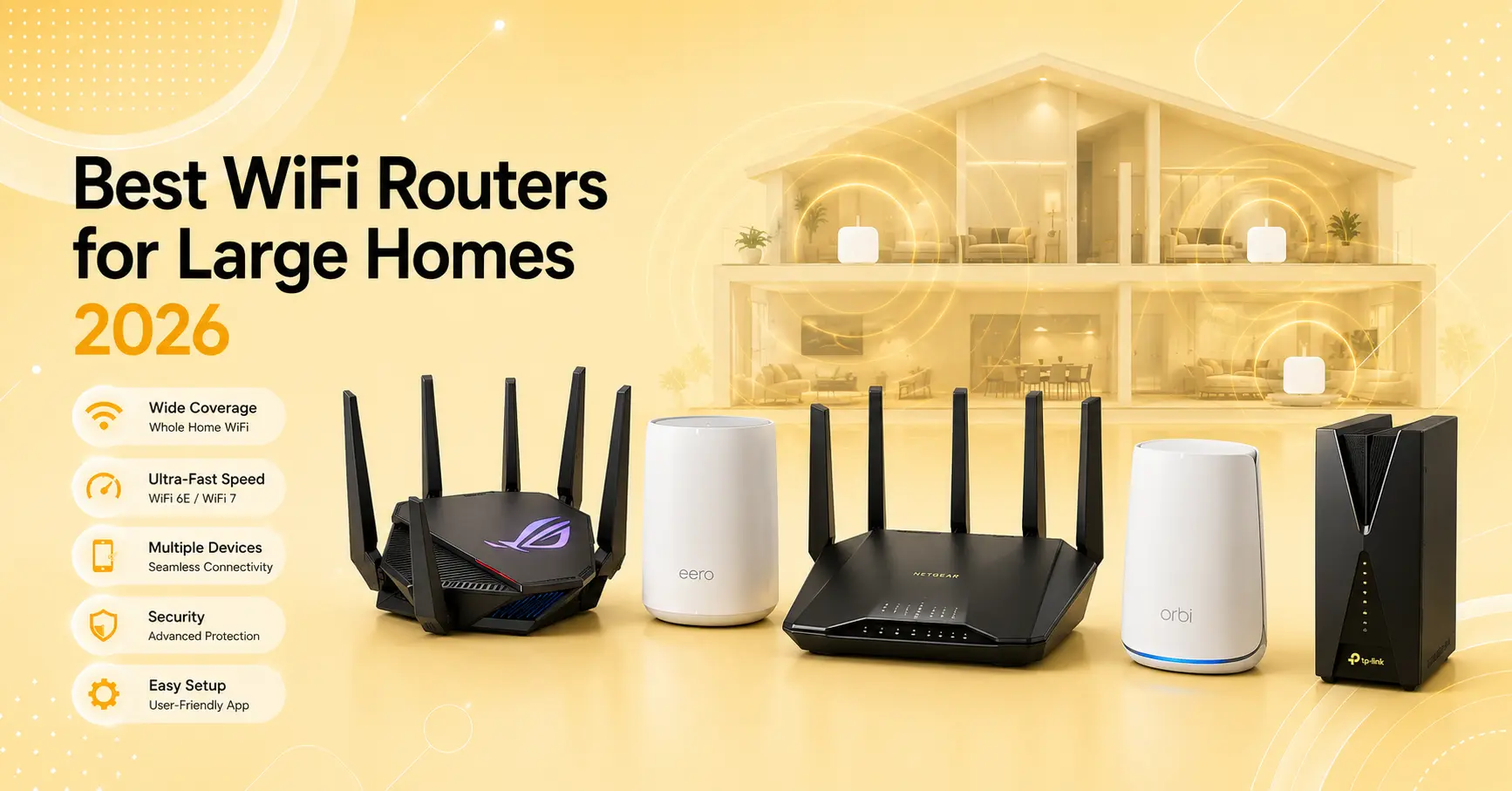
👉 Read next: Best WiFi Routers for Large Homes 2026
👉 Also useful: How to Boost Your WiFi Signal in Any Home
About the Author
[Raouf Osman] is a tech writer at WekyTech covering smart home technology and home automation for US and Canadian readers. He/she has tested smart home devices across apartment and house environments, evaluating real-world reliability rather than feature lists — because a device that works 95% of the time is not smart home ready.